
Moving Canvas: eL Seed and Art Be a Part Transform a School Bus into a Symbol of Inclusion When the SNF Development Centre mentioned that they wished for a minibus to help transport their students, Art be a Part knew it had to make that dream come true. For SNF students, the minibus represents more than just a mode of transport. It’s a symbol of freedom, independence, and opportunity, enabling them to explore the world beyond the classroom with ease and confidence. Driven by its mission to combine art and philanthropy, Art be a Part stepped forward to donate the minibus to SNF. But the story didn’t end there. It became an inspiring collaboration that turned practicality into creativity, and a simple vehicle into a work of art. Renowned artist eL Seed generously contributed his time and talent to transform the minibus into a vibrant moving canvas. Working alongside the students of SNF, he guided them through the creative process, encouraging each to express themselves through colour and form. Together, they infused the minibus with hope, joy, and inclusion, making it not just a means of transport but a symbol of empowerment and self-expression. The result is a project that beautifully embodies the values of Art be a Part, compassion, creativity, and community. It stands as a reminder that when art meets purpose, transformation follows, not only in the spaces we create but in the lives we touch. https://artbeapart.com/wp-content/uploads/2025/10/Snf2.mp4
Spread A Smile 2026
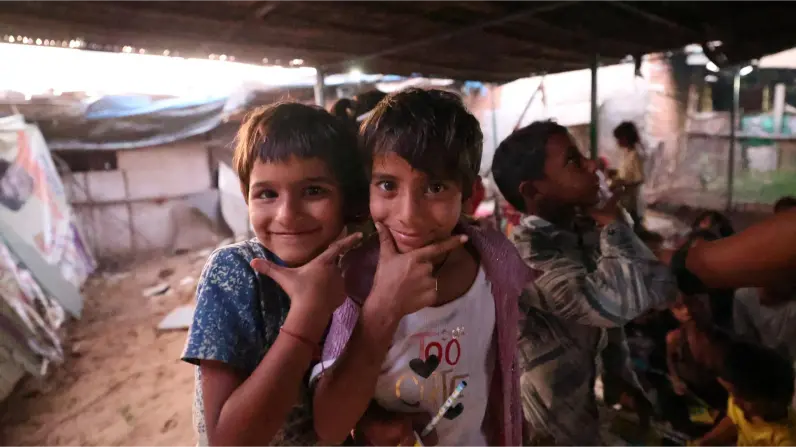
Spread A Smile 2026 Jaipur, India | 21 – 22 February 2026 Where Art Meets Community Spread A Smile 2026 began with people – 96 volunteers, many of them college students, who came together across Jaipur with a shared intention: to show up, connect, and create moments of joy through art. What unfolded over two days was not just a series of activities, but a collective experience shaped by presence, empathy, and participation. Powered by Art Be a Part in collaboration with Poetriarchy, the initiative was set across five locations – Kathputli Nagar, Triveni Nagar, Chitrakoot Basti, Matrachhaya NGO, and Prem Niketan Ashram. Engaging underprivileged children and elderly residents through art-led interactions designed to be both accessible and meaningful. At its core, the program blended creative expression with practical support, ensuring each interaction carried both emotional and tangible value. The first day centred on children, where guided art sessions and interactive activities created space for expression, collaboration, and exploration. These moments were not just about creating art, but about building confidence, encouraging participation, and fostering a sense of belonging. Alongside the sessions, 750 meal boxes and 500 stationery kits were distributed, supporting both immediate needs and continued learning. On the second day, the focus shifted to Prem Niketan Ashram, where the initiative extended to elderly residents. Through music, storytelling, and open conversations, the atmosphere became one of shared presence – a reminder that connection, at any age, remains deeply meaningful. In total, Spread A Smile 2026 reached over 750 children and 60 elderly individuals. Every element – from creative workshops to material distribution, was thoughtfully structured, yet grounded in human connection, allowing the experience to feel both organised and deeply personal. “Seeing volunteers, children, and communities come together like this is a reminder that impact doesn’t have to be complex – sometimes it begins with simply showing up and creating something together.” – Medha Nanda, Founder of Art Be a Part. Spread A Smile 2026 reflects Art Be a Part’s approach to impact – where creativity becomes a catalyst for connection, and collective participation translates into meaningful, measurable change.
How Art be a Part and UNICEF Are Transforming Education for Children with Disabilities in India
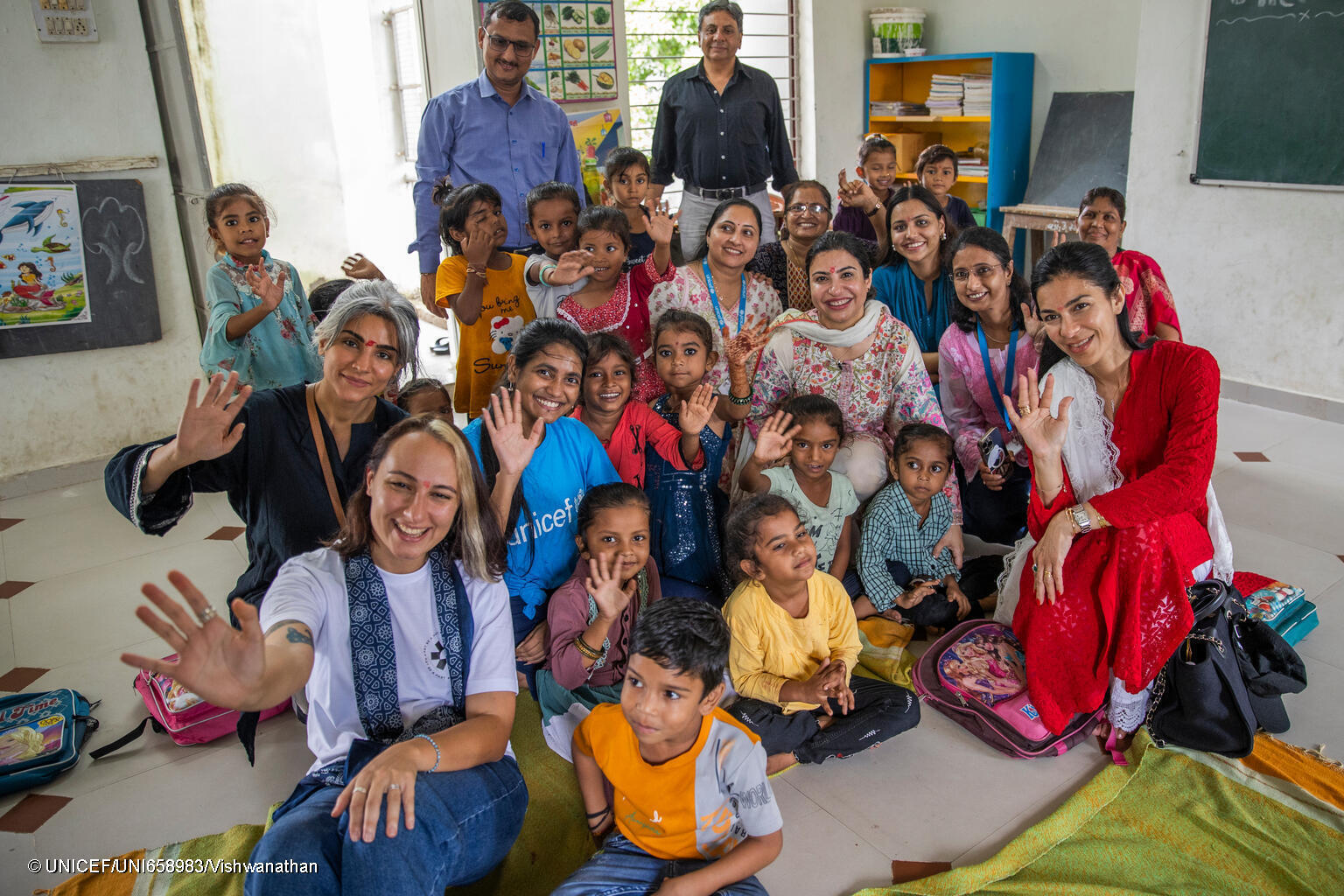
How Art be a Part and UNICEF Are Transforming Education for Children with Disabilities in India In India, where education has long been recognized as a pathway to growth and equity, millions of children are finding new opportunities to learn, grow, and thrive. Yet, for children with disabilities (CwD), the path to inclusion remains fraught with challenges, from inaccessible infrastructure to limited awareness and inadequate teacher preparation. The transformative partnership between UNICEF and Art be a Part, this reality is changing for thousands of children. Through their shared vision, over 10,000 children aged 3–10 years with disabilities are now gaining access to quality and inclusive education, paving the way for lifelong learning and empowerment. India’s education landscape has evolved significantly over the past two decades. Over 246 million children are now enrolled in schools, and 73% of Grade 1 entrants have pre-primary experience, a sign of growing emphasis on early childhood education. However, children with disabilities remain among the most marginalized. Despite constitutional and policy guarantees, their school participation remains low, only 0.9% of total enrolment from pre-primary to Grade 12. Girls with disabilities are even more at risk of exclusion, with enrolment dropping sharply at higher grades. Inadequate school infrastructure compounds the problem: while 59.5% of schools have ramps with handrails, only 30.6% of children with special needs (CWSN) – friendly toilets are functional. These barriers underline the urgent need for systemic solutions, a need this initiative directly addresses. The UNICEF & Art be a Part partnership focuses on enhancing inclusive learning environments through a multi-pronged strategy, from early identification to home-based education and teacher training. Art be a Part founder & UNICEF India Champion for Children, Medha Nanda, along with Advisory Board Member of Art be a Part, Namrata Shroff & Founder of Looking Glass FZE, Rinku Awtani, pose for a group portrait with Children & special educators. City: Gandhinagar, State: Gujarat, Country: India, 10th September 2024 – Photograph By UNICEF India/ 2024/ Prashanth Vishwanathan. Programme interventions supported by Art be a Part 1. Identifying and Including Children with Disabilities In 20 communities across an aspirational district, door-to-door surveys helped identify 40 children with disabilities, many of whom had never been enrolled in school. Following sustained family engagement, 38 of these children are now attending either Anganwadi centres or schools, marking their first step into inclusive learning. Additionally, 37 new cluster-level resource rooms were established in Gujarat, bringing the total to 792. These rooms provide specialized therapy, counselling, and teacher support closer to communities, ensuring early intervention and improved referral systems. 2. Improving School Infrastructure Through the School Accessibility Audit Toolkit, nearly 2,000 schools have been assessed for accessibility, prompting infrastructure upgrades that now benefit 275,000 children across the state. These efforts are creating safer, more inclusive learning spaces that welcome every child. 3. Expanding Home-Based Education For children with severe and multiple disabilities who cannot attend school, Home-Based Education (HBE) has emerged as a powerful inclusion model. With UNICEF’s support, 2,575 children (1,095 girls and 1,480 boys) are now receiving structured education at home through comprehensive HBE guidelines and multilingual learning materials. Training sessions for 283 Master Trainers have standardized HBE delivery, while parents are equipped with tools to create stimulating learning environments at home. 4. Strengthening Teacher Capacity Inclusive education begins with empowered educators. To this end, UNICEF has supported the design of training modules for Anganwadi workers, teachers, and supervisors across multiple states. More than 200 master trainers and 2,000 special educators have been trained, and 87,000+ users are now active on the PRASHAST App, a digital tool for early disability screening. A Training Needs Assessment covering 963 block resource persons in Assam and West Bengal has further informed the development of refresher training and practical classroom strategies, ensuring inclusive pedagogy reaches every classroom. 5. Empowering Parents and Communities Community awareness is essential for sustained inclusion. In October 2024, Early Childhood Care and Education (ECCE) Day reached 184,000 parents across 32,901 Anganwadi centres, focusing on developmental delays and early intervention. Parents are now more engaged in supporting learning at home, and monthly home visits by Anganwadi workers provide personalized guidance to families with children with disabilities. A Story of Transformation: Viraj’s Journey https://artbeapart.com/wp-content/uploads/2025/11/Inclusive-Education-horizontal_1.mp4
SNF Development Centre: A Place Where Young Adults with Special Needs Truly Belong
SNF Development Centre: A Place Where Young Adults with Special Needs Truly Belong For Safia Bari, the director and founder of SNF Development Centre, her journey began with a vision deeply rooted in compassion and understanding. Established in 2007, the centre was created to address the unique needs of young adults with special needs, ensuring they have a space where they are valued, supported, and included. “The mission of SNF is mainly to integrate them into society, to make them feel that they belong here. They’re a part of society,” Safia explains. This guiding principle drives every program, activity, and initiative at the centre, from education and skill-building to social engagement and community involvement. For Safia, the most rewarding moments come not from formal achievements but from everyday interactions with the students. “Most rewarding part of my day… during break time, I make sure that I go and say hi to all of them. And even if one of them comes and says, ‘I missed you’ or ‘I love you,’ or they just hug me, that really makes my day,” she shares warmly. It is this bond, built on trust, care, and mutual respect, that makes SNF more than just a centre—it is a community where students feel seen, heard, and loved. “At the end of the day, I feel that I can sleep well when I spend the day with these children,” Safia adds, emphasising the personal fulfilment and joy that come from her work. Over the years, SNF Development Centre has become a sanctuary for young adults with special needs, offering them not just education and skills but also a sense of belonging and self-worth. Safia’s dedication ensures that every student feels included in society, and every day is an opportunity for growth, connection, and love. Through her vision and unwavering commitment, Safia Bari and SNF Development Centre continue to transform lives, proving that inclusion, care, and human connection are at the heart of true empowerment. https://artbeapart.com/wp-content/uploads/2025/10/Reel-Special-Needs.mp4
How the Art be a Part x UNICEF India Partnership Sparked Change
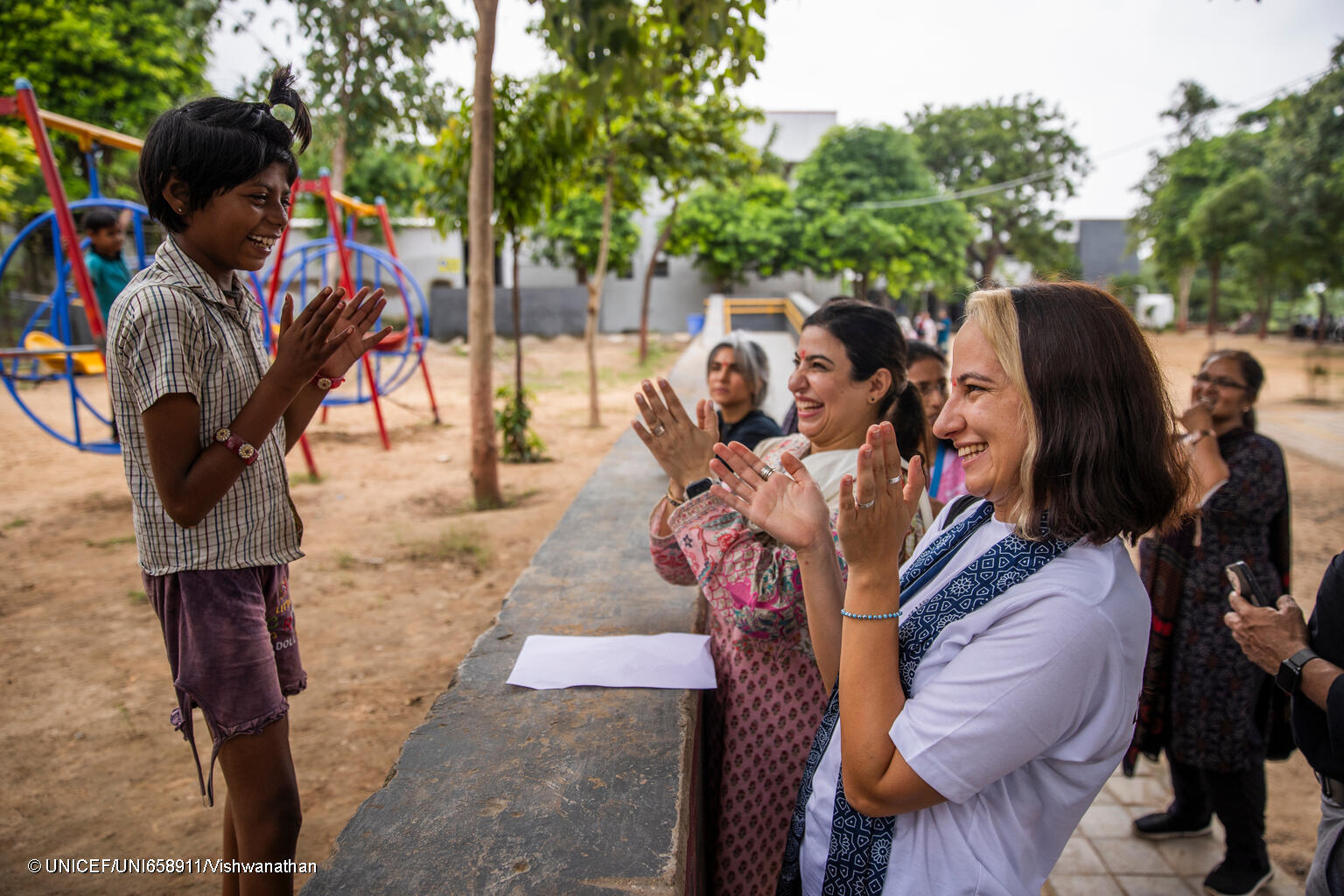
How the Art be a Part x UNICEF India Partnership Sparked Change When Art be a Part (ABaP) first dreamed of collaborating with UNICEF India, the vision was simple yet powerful: to bring creativity into the lives of children who often had no access to it. But what began as an idea to spend a day painting in villages with children soon evolved into something much larger—a systemic shift in how creativity and inclusion are woven into education. This shift gave birth to SpArK (Special Art for Kids), a pioneering initiative that uses art not just as a form of expression, but as a universal language of inclusion. The Genesis of the Partnership “When I first approached UNICEF, my idea was to go to villages and schools to paint with kids and give them a day full of creativity,” recalls one of the founders of ABaP. “But UNICEF said it wasn’t fair to give them a taste of something and not be able to do it continuously. Instead of a one-day event, it’s better to embed creativity into their system. That’s how we began aiming for systemic change.” This insight became the foundation of SpArK. Rather than fleeting experiences, the partnership focuses on sustainable programs that integrate creativity and expression into the very fabric of children’s education—particularly those with disabilities. Why Disability Inclusion? Disability inclusion was not an afterthought; it was at the heart of SpArK from the very beginning. In many rural communities across India, children with disabilities are often hidden away, misunderstood, or deprived of opportunities. “In villages, many parents didn’t even know what disability was,” the founders explain. “Without awareness, they couldn’t look after or help their children. Some were even locked away. With UNICEF’s support, we are educating communities and parents to understand that these children can live as normal a life as possible. And because art has no language barriers, it is the best way to communicate.” Overcoming Challenges Launching SpArK was not without hurdles. Each state in India has unique needs, requiring tailored programs. The lack of awareness about disabilities posed a significant barrier. Finding volunteers and training teachers—already overburdened—was another challenge. Perhaps the biggest obstacle was securing government approval to integrate SpArK into education systems. Here, UNICEF’s expertise and close collaboration with state governments proved invaluable. “UNICEF is amazing at what they do,” the founders note. “They know how to work with governments to make systemic change possible.” Keeping Art at the Heart At every stage, art has remained the centerpiece of SpArK. From drawing to music, children are encouraged to express themselves in ways that transcend language. “Every one of us has an artist inside,” the founders emphasize. “For a child, it is often easier to communicate feelings through drawing or music than through words.” A Moment of Realization For ABaP, the turning point came with the first school visit where SpArK was being implemented. “The day I visited, I knew we were doing something right. It not only motivated us but made us more driven to expand the initiative.” Impact of the Gala The annual ABaP Gala plays a vital role in fueling this change. Funds raised directly support SpArK, enabling training programs, community awareness campaigns, and the integration of art into classrooms. With UNICEF’s reach and ABaP’s creative vision, the initiative is spreading across states, transforming lives one community at a time. As UNICEF notes, “Every child deserves a chance to learn, to express, and to belong. SpArK ensures that children with disabilities are no longer left behind.” From a simple idea of painting with children to a nationwide movement for inclusion, the ABaP x UNICEF India partnership proves that art is far more than expression—it is empowerment.
Where Creativity Leads, Confidence Follows: The Story of SpArK
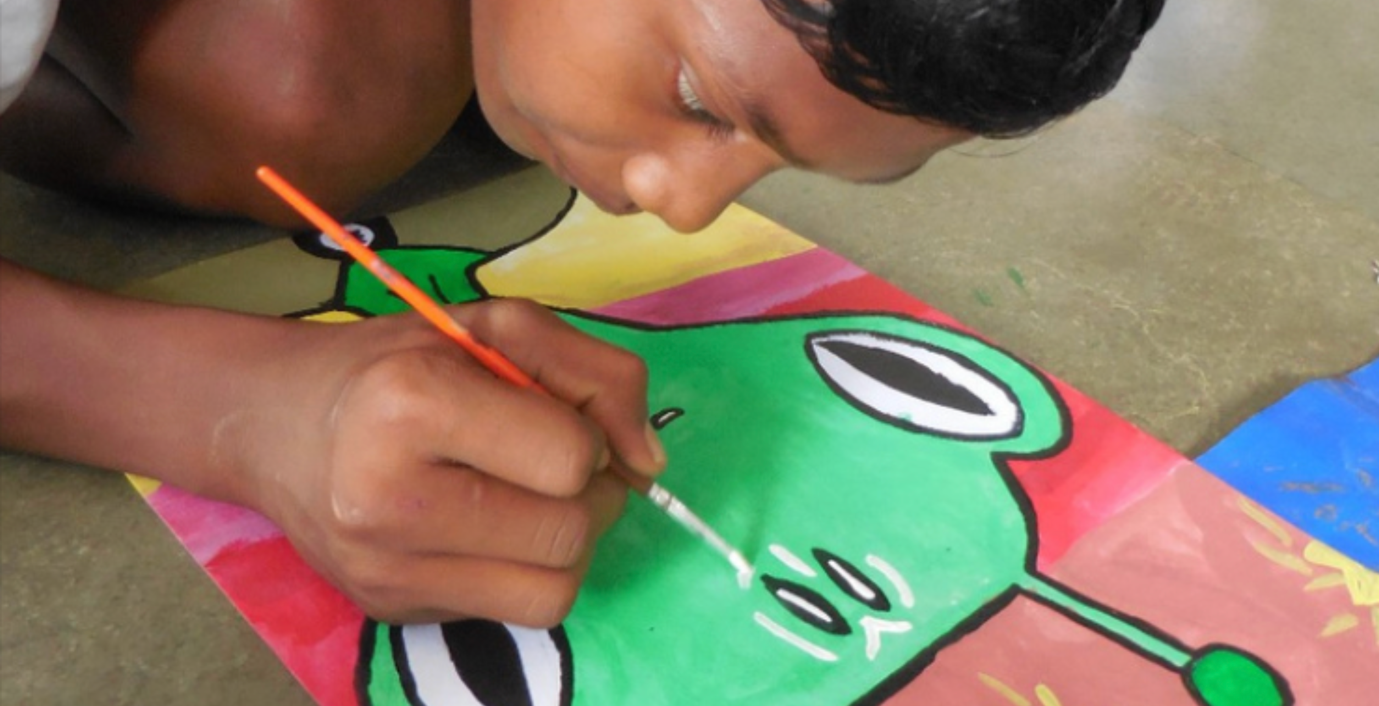
In a sunlit classroom, a shy little girl found herself in the spotlight during an impromptu theatre exercise. At first, she glanced around nervously, but as her classmates cheered her on, something changed. With a big smile, she stepped forward and performed with a steady voice and confident body language. In that simple yet powerful moment, she truly embodied the spirit of SpArK, inspiring everyone around her. We are delighted to announce the significant impact of our in-school art initiative, SpArK, a collaborative effort between Art be a Part and Aldona Arts Foundation in Goa. This initiative changed the lives of 621 students across 4 schools in the villages of Aldona, Nachinola and Moira. Together, we have achieved 28 all-day art workshops integrated into the school curriculum. Our 4 expert mentors designed sessions in theatre, dance, capoeira and visual arts. Every child received nutritious meals during the program. All of this led to powerful results such as greater confidence and participation in classrooms, improved emotional expression and curiosity in learning. https://artbeapart.com/wp-content/uploads/2025/08/SPARK-Goa-Reel.mp4 We are now working to expand this vision and infuse more colour, joy and creativity into the education system. Here’s what we have planned next: Collaborating with more schools and educators to extend our impact. Developing a sustainable creative curriculum that can be applied throughout the year. Securing funding for art materials, infrastructure, and continuous mentor training. Initiating an annual SPARK festival, a public showcase of student artwork, performances, and community creativity.We have the opportunity to rethink education. It should not merely be a place for memorising information but instead a space for expression, exploration, and growth.